Looking for Caterpillars, Finding a Cicada
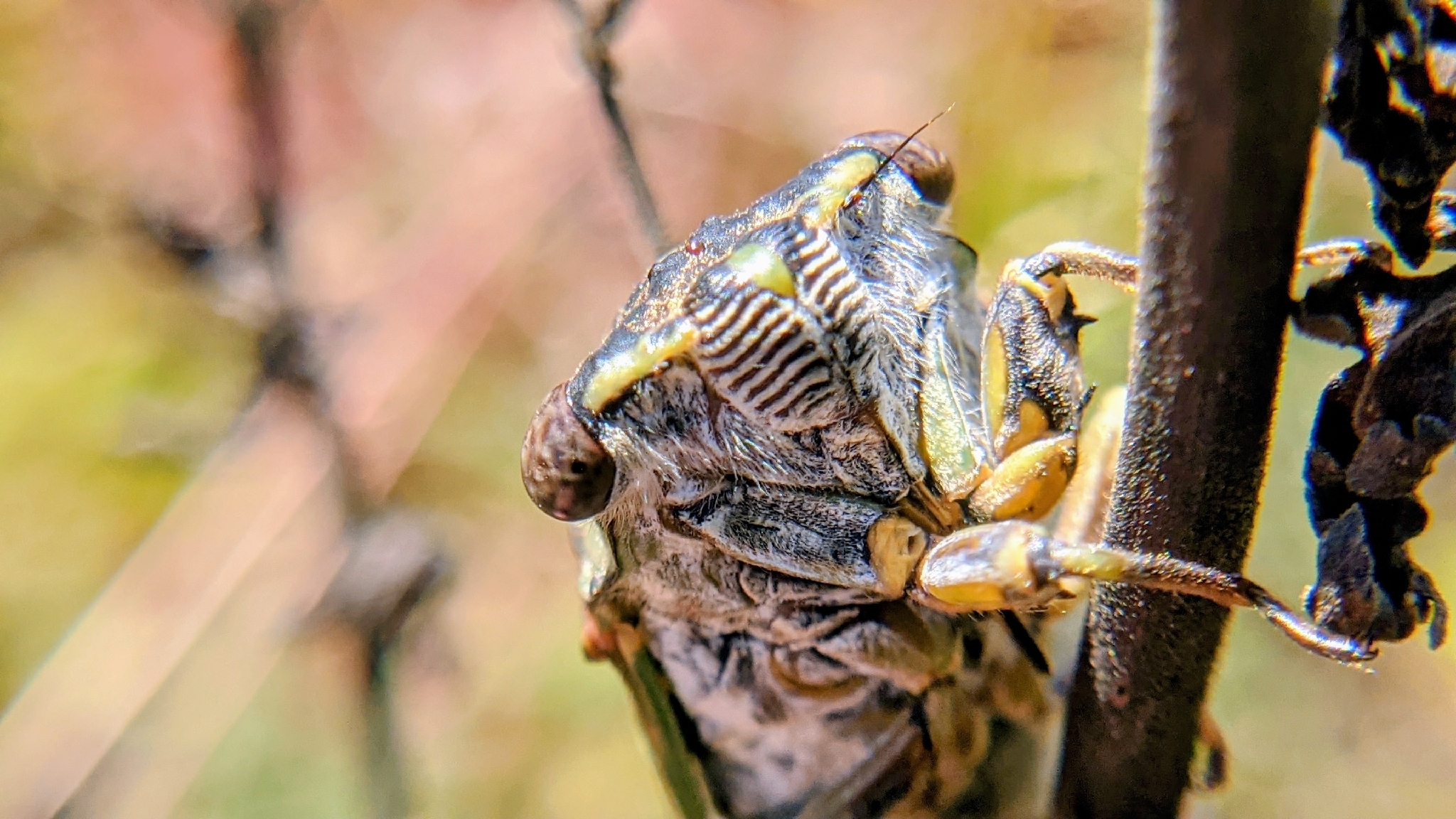
After inspecting a few hundred fernleaf false foxglove (Aureolaria pedicularia) fruits last Friday, my eyes were tired, and I was about to give up my quest when I spotted her. It's funny how you can tunnel-vision on something specific and miss what's right in front of you. Only when I relaxed my focus did I notice an unusual shape along the stem of the plant: a gorgeous cicada! Maybe I walked right past a few hundred of them (just kidding!), so fixed was I on hunting, head down, for caterpillars in the fruits of the false foxglove.
In any case, here she was, a Northern dog-day cicada (Neotibicen canicularis), quietly resting on the plant. A little surprising to see her there, but maybe not. I usually hear them high in the oak canopy, but then again, false foxglove is a known associate of oaks, a root parasite of them, in fact, so maybe she'd come down to check on the flower patch below, or to grace me with her presence.
Their call is one of the more identifiable sounds of a Massachusetts summer, a rising mechanical buzz, steady and unwavering, that runs about fifteen seconds before trailing off. It's often likened to a circular saw or angle grinder, and unlike some Neotibicen, it never develops the pulsing wobble some cicada songs have, a good way to tell it apart by ear.
They're called "annual" cicadas, though that's a bit misleading. Like all cicadas, individuals spend years underground as nymphs (commonly two to five, though estimates vary here), feeding on root xylem. What makes them "annual" is overlapping broods, so some adults emerge every year rather than in synchronized mass eruptions like the periodical Magicicada. Adults themselves live only one to three weeks, just long enough to mate and lay eggs in woody stems.
The typical form is black with vivid green markings and green-veined wings, though plenty stray from that pattern, some running mostly brown, others darkening to almost solid black. Local records show the species turning up everywhere from mixed forests to suburban yards.
They're the smallest of our annual cicadas, noticeably outsized by the lyric cicada (N. lyricen), the other Neotibicen most likely to share your yard. Lyric cicadas run larger overall, sport a black pronotal collar rather than green, and tend to emerge a bit earlier in the season, singing from around July, while dog-day cicadas hold off until the later, hotter stretch of August into September.
Sometimes attention isn't about staring harder; it's about loosening your grip enough to let the world in.
📷 Northern Dog-day Cicada · Cigale Caniculaire (Neotibicen canicularis) | © Claire O'Neill, please credit accordingly.

No comments:
Post a Comment