Sunday, March 22, 2026

Eiders Preparing for Summer Quarters ๐“…ฏ

March on the Northeast coast still feels like winter, but if you pay attention, things are already shifting. Common Eider know it. 

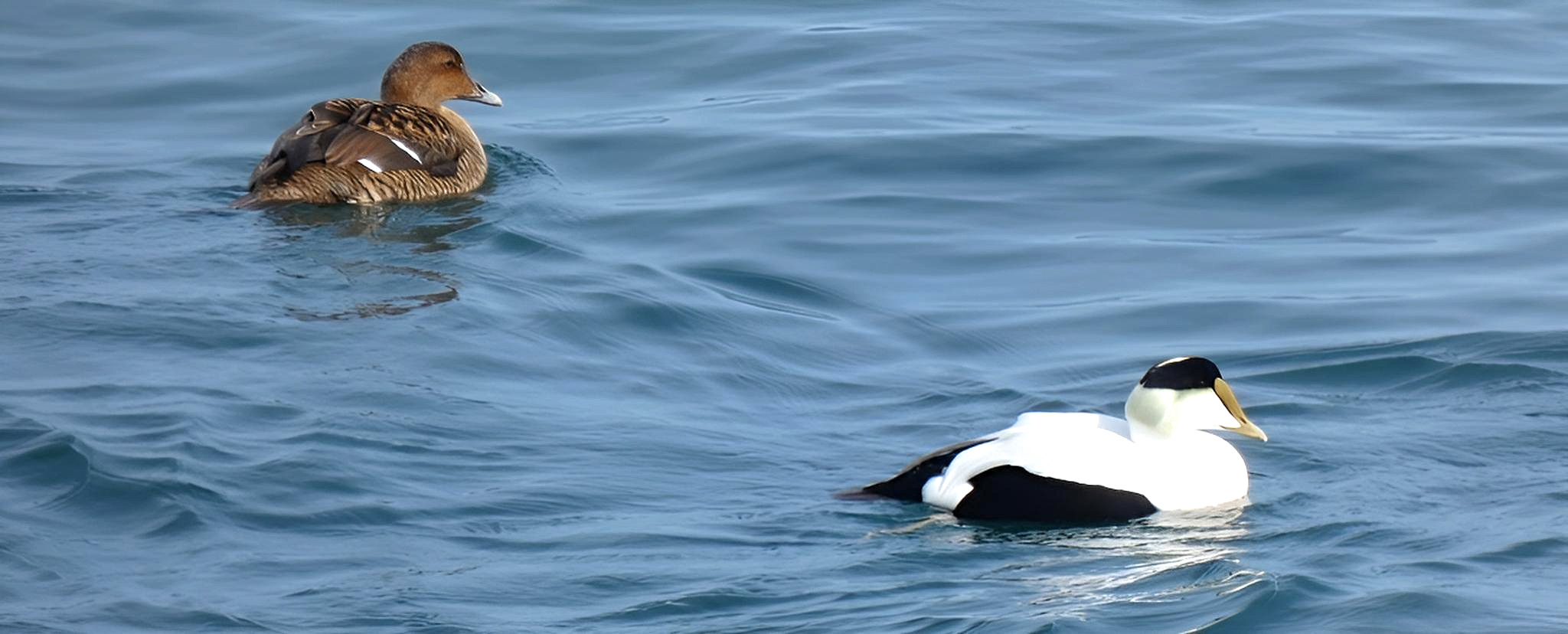
They’ve been here all along, holding steady through the cold, riding rough water most species avoid. Now the males are in full black and white, calling, posturing, starting the work of courtship. The females stay quiet, mottled brown, already aligned with the rocky shorelines where they’ll nest.

Look offshore and you’ll see them in rafts, diving in sync for mussels and other shellfish. No flash, no urgency. Just persistence.

Did you know they are a Near Threatened species? Over the past two days at Deer Island, we logged more than a thousand. That matters. After periods of regional decline tied to disease and environmental pressure, seeing numbers like this suggests a rebound, or at least some local resilience.

They are also the largest sea duck in the Northern Hemisphere. Hard to miss, if you take the time to look.

March isn’t a transition. It’s already in motion.

๐Ÿ“ท Common Eider · Eider ร  Duvet (Somateria mollissima) | © Claire O'Neill, please credit accordingly.

Sunday, March 15, 2026

⚘ Catkins Before Leaves: Seasonal Timing in Northeastern Willows

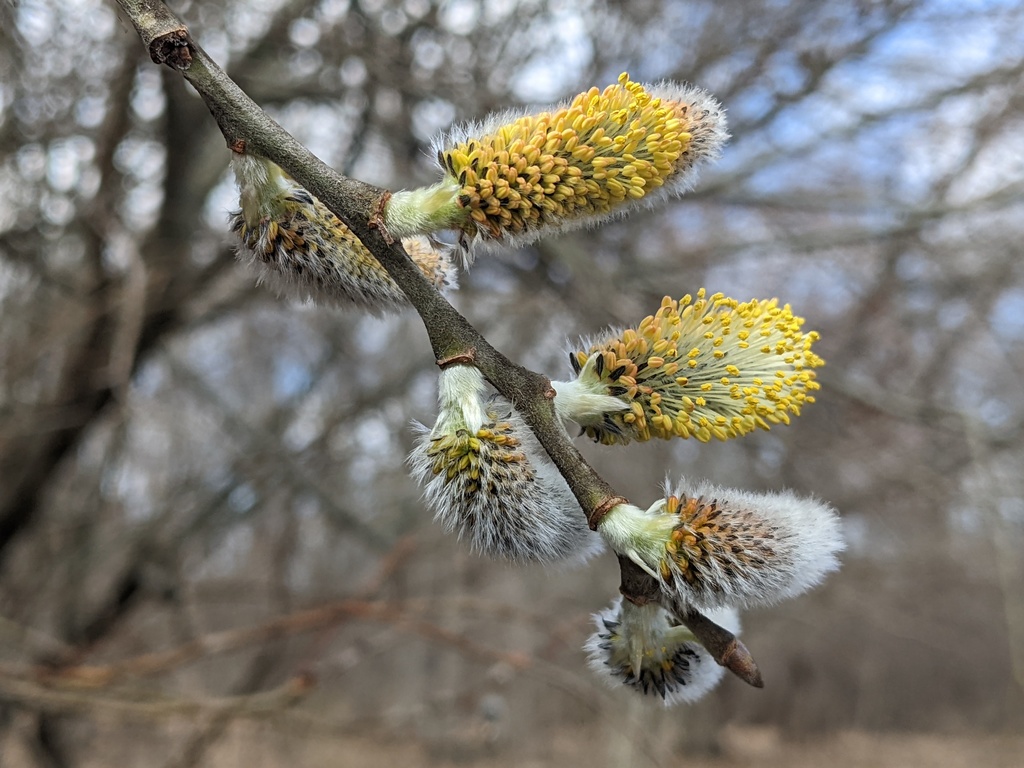
In the Northeast, willows are among the first woody plants to wake from winter dormancy. Their catkins appear in late winter to early spring, often before the leaves unfold. Male and female trees bear separate catkins that release abundant pollen and nectar, making willows one of the earliest and most important food sources for bees and other pollinators. The one in the banner is a male pussy willow from our Lusitania site that I photographed in late March 2022.

Leaf emergence follows quickly as temperatures rise. Shoots then grow rapidly through the moist stretch of the growing season, especially along riverbanks, floodplains, and wetland edges where willows thrive. By late summer, growth slows and the season’s shoots begin forming buds. These buds harden as autumn approaches, preparing the trees for winter and closing a phenological cycle that closely tracks floodplain hydrology and the needs of early spring pollinators. 

๐Ÿ“ท Pussy Willow · Saule Discolore (Salix discolor) | © Claire O'Neill, please credit accordingly.
Sunday, March 8, 2026

๐Ÿฅฌ Skunk Cabbage Wakes the Wetlands

A Quiet Sign of Spring

Skunk cabbage is blooming across northeastern wetlands right now, a quiet sign that winter is loosening its grip. Among the first wildflowers to appear, it pushes through cold mud, lingering ice, and leaf litter while the forest canopy is still bare.

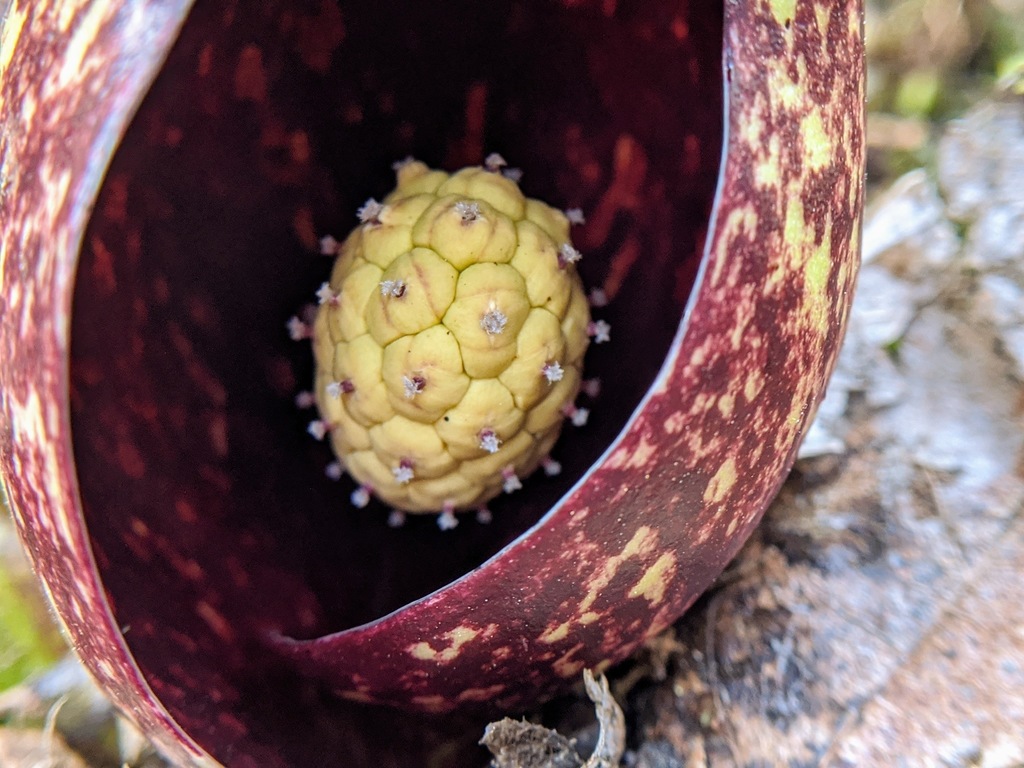
What you notice first is not a petal but a curved, mottled hood called a spathe. Often deep maroon with yellow green streaks, it opens slightly to reveal a rounded spadix packed with tiny flowers. The chamber runs warm. Skunk cabbage can generate its own heat, warming the air, releasing its pungent scent, and attracting early flies and beetles that seek carrion and shelter.

Look for it in soggy low spots along streams and swamp edges where the ground stays saturated. Before the broad leaves appear, wetlands are dotted with these small lanterns, feeding the first pollinators and marking the start of the forest year. ๐ŸŒฟ

๐Ÿ“ท Eastern Skunk Cabbage · Chou Puant (Symplocarpus foetidus)| © Claire O'Neill, please credit accordingly.