Sunday, August 2, 2026

One Life - Fifteen New Beginnings 🦟

At first glance, it looked like a little piece of debris. As I approached, I realized it was a beetle pupa attached to the top of a rugosa rose leaf. 
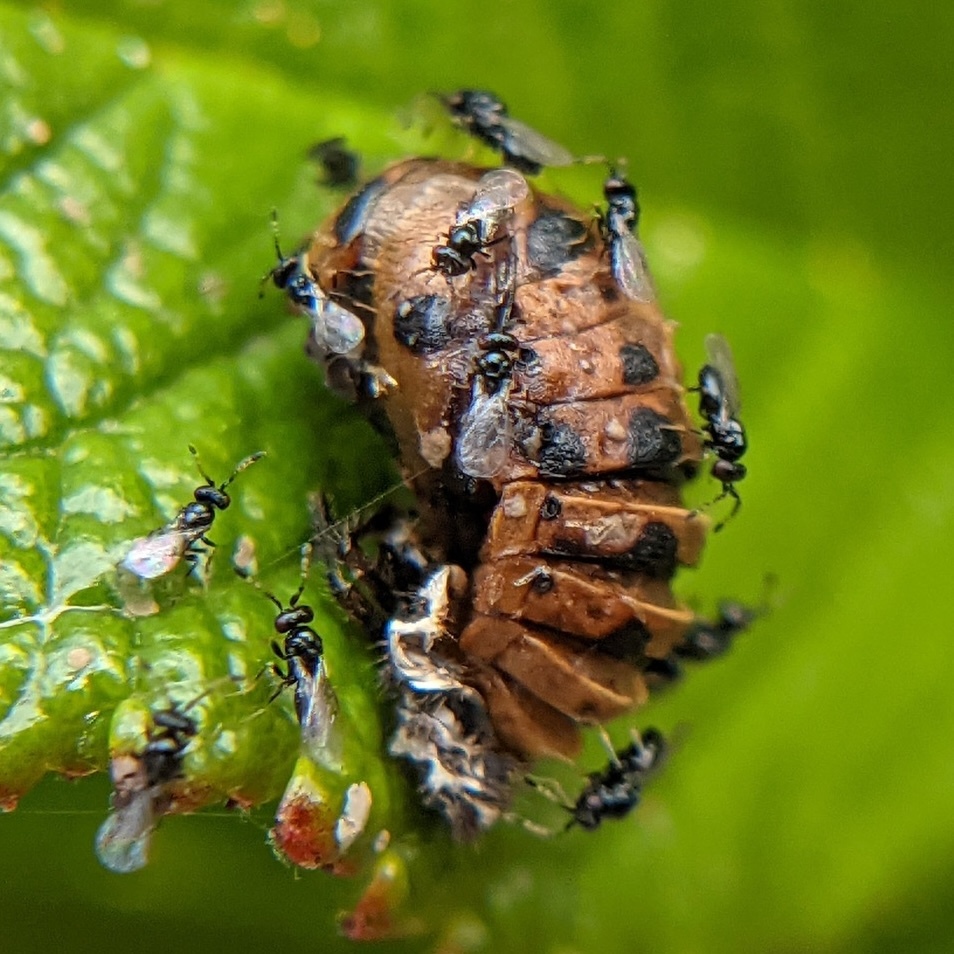
On closer inspection, I noticed some fifteen tiny parasitoid wasps, likely chalcidoids and perhaps members of the Tetrastichinae subfamily, moving deliberately over its surface. Each was only a few millimeters long, yet together they transformed what seemed like an old, dried pupa into another fascinating natural history moment.

If these wasps had just emerged from the pupa, then instead of a single beetle completing its transformation, an entire brood had begun theirs. One host had become the nursery for these minute wasps, a reminder of the intricate ecological relationships that quietly shape insect populations.

These tiny wasps are more than a curiosity. As parasitoids, their larvae develop by feeding on a single host and ultimately killing it, helping to regulate populations of herbivorous insects and acting as quiet biocontrol allies in gardens, fields, and wild plant communities.

It is easy to walk past little details without a second glance. But slowing down and looking closely revealed not a piece of debris, not one insect, but some fifteen, each beginning its own story.

πŸ”Ž︎ More about parasitoid wasps → https://extension.umn.edu/beneficial-insects/parasitoid-wasps | More about North American genera of Tetrastichinae (Hymenoptera: Eulophidae) → https://doi.org/10.1080/00222939400770091.

πŸ“· Subfamily Tetrastichinae | © Claire O'Neill, please credit accordingly. 

Saturday, August 1, 2026

First Mola Mola Encounter, Oh My! 𓆝


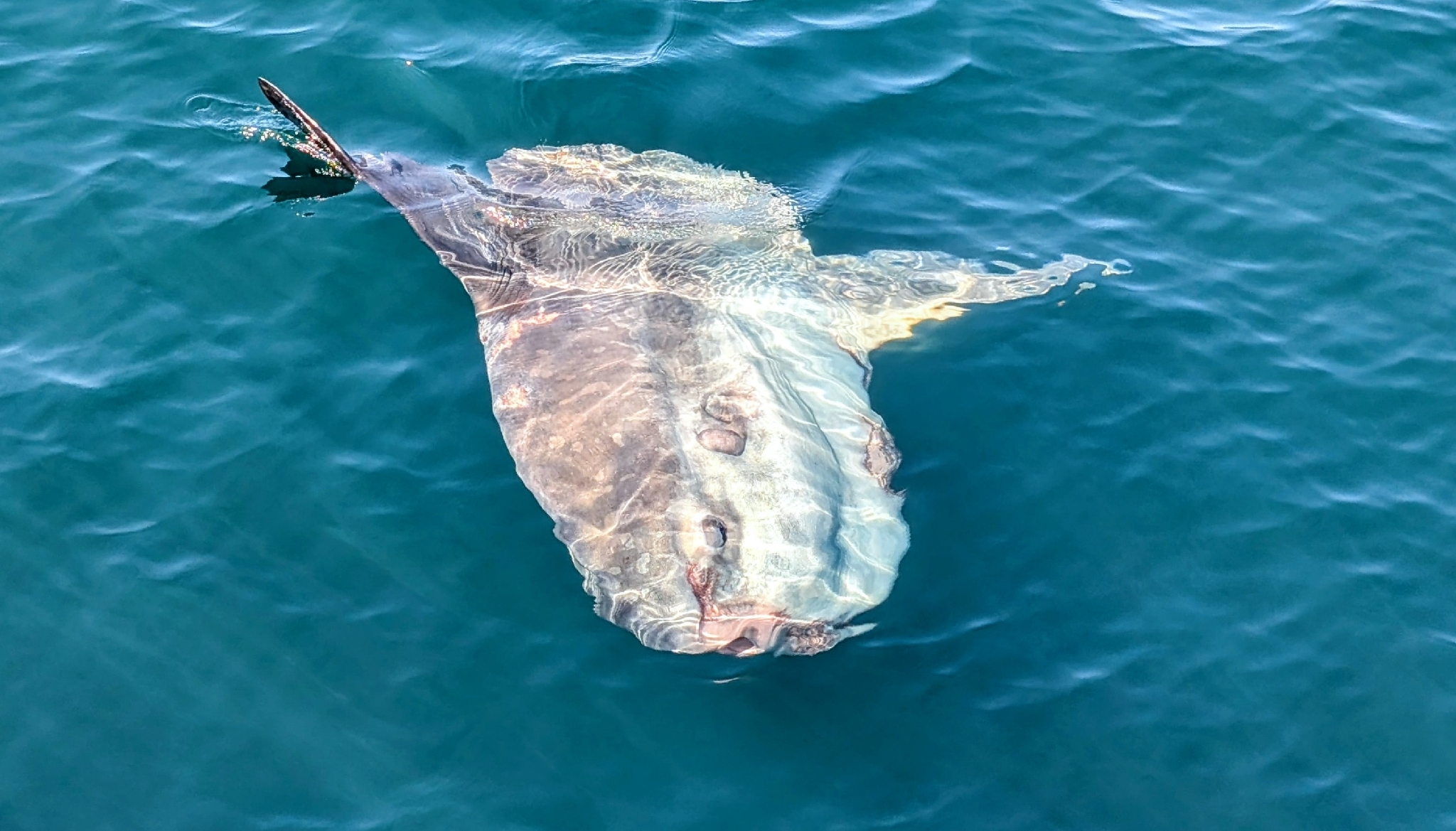
Oh my God, what a treat! My first wild mola mola! What a fantastic fish!!! And not just one, but three! A truly grand day, made even more special by watching a group of nine or so humpbacks and a gray seal at Stellwagen Bank.

What an awesome, wonderfully strange fish: such an unusual shape, yet the largest of all bony fishes. I knew mola mola drift, but do they actually swim? I had to check.

Despite their awkward appearance, mola mola are surprisingly efficient swimmers and active foragers. During summer, they enter Stellwagen Bank in search of prey, including jellyfish, salps, squid, and small fish. They may not be fast swimmers, but they can travel long distances and make impressive dives. They move through the water using their enormous dorsal and anal fins, a remarkable adaptation for such an extraordinary fish.

Nature never stops surprising me and rewarding my curiosity. πŸ’š 

πŸ“· Common Mola · Mouldouz · Poisson-Lune (Mola mola) | © Claire O'Neill, please credit accordingly