Sunday, April 26, 2026

❀༉ A Quiet Invader in Bloom

Spot It, Stop It: Garlic Mustard in Bloom
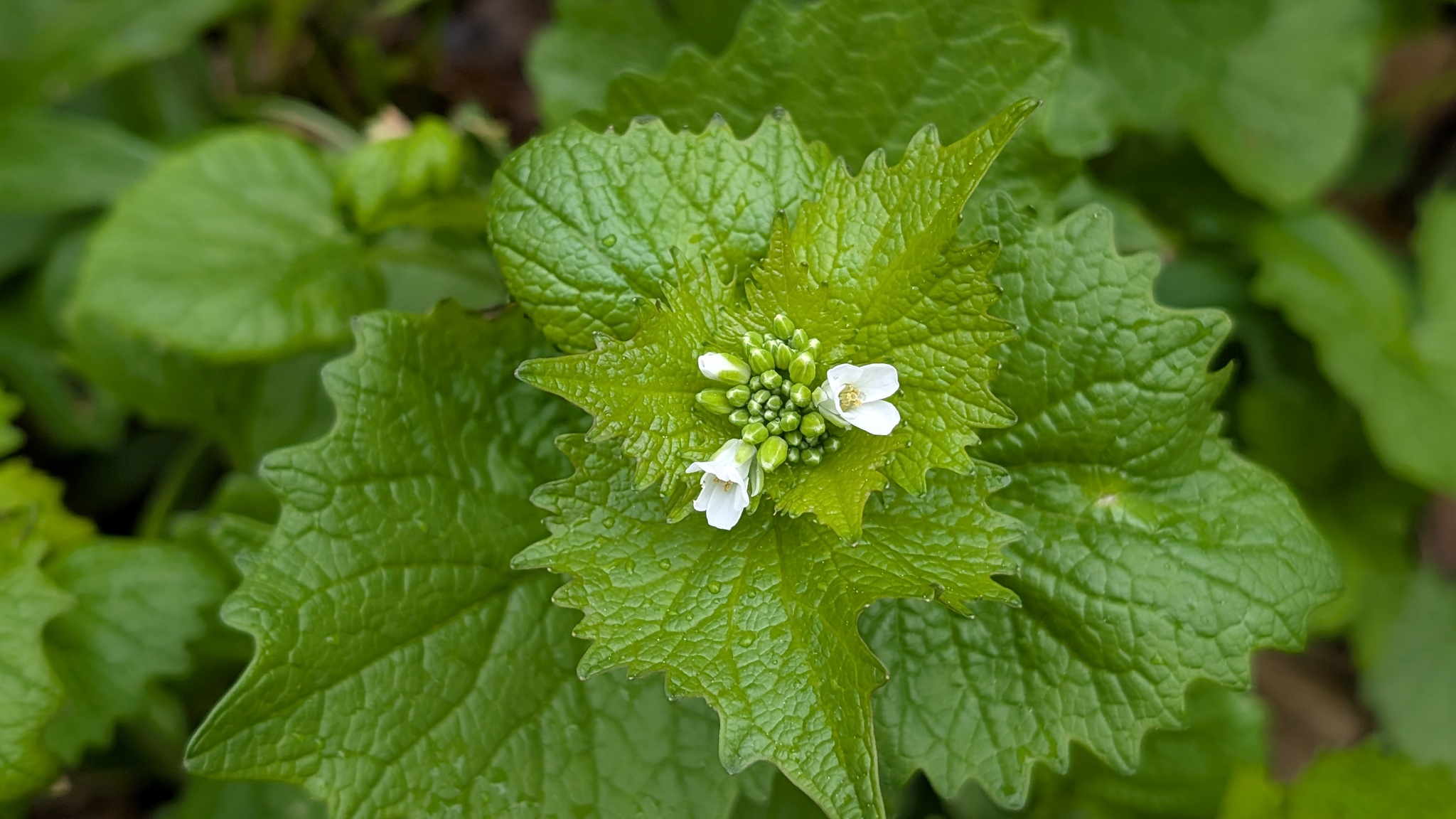
Garlic mustard is now in bloom along many trails and forest edges in our region. Those pretty white flowers belong to a highly invasive plant that crowds out native spring wildflowers and alters forest soils. If you’re out walking, take a moment to learn this species and, where allowed, pull the flowering plants (root and all) and bag and remove them from the site. Do not leave them on the trail, as they can still go on to fruit and drop seed. Consistent spring removal over several years can significantly reduce its impact on our local woods. Whether you remove it or not, you can also document your observations through the EwA Invasive Flora Patrol so your sightings contribute to a better picture of where and how this species is spreading, and how effective remediation methods are.

You can read more about garlic mustard, including identification, phenology, and control methods, in EwA's (Online) Guide to Common Invasive Species in Middlesex County here.

📷 Garlic Mustard · Alliaire Officinale (Alliaria petiolata) | © Claire O'Neill, please credit accordingly.

Wednesday, April 22, 2026

Where Attention Cannot Be Scheduled

I do not observe Earth Day. Not out of indifference, but because my cultural roots, my ancestral tradition, do not separate the honoring of land into a single designated moment. I am Breizh, from a Celtic people of Brittany whose relationship with the living world is not an occasion but a foundation. That relationship was not given to us by an environmental movement. It preceded one, and it will outlast the next. Every emergence, every season, every shift in what the land is doing carries more information than any symbolic calendar date. It makes sense that with time, I became a phenologist, a keeper of time. 

When attention to the natural world is genuine, it cannot be scheduled.

Sunday, April 19, 2026

𓆤 Sleeping Beauty on Pine

 The Quiet Grip of a Nomad Bee

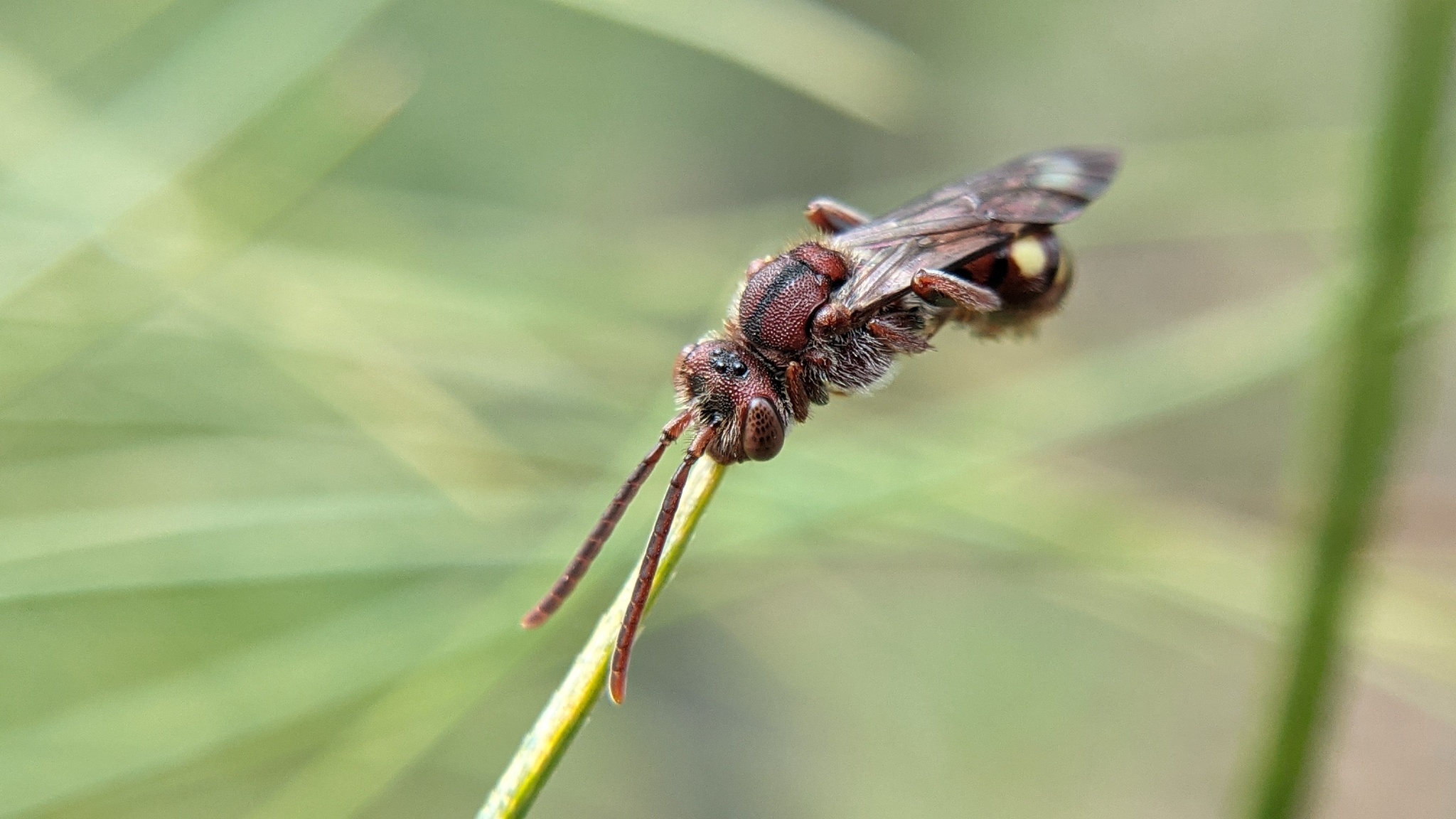
I am smitten! 🧡 I encountered this sleeping beauty while checking for tracks on an eastern white pine. And finally my first nomad bee of the season! Well technically my second one today.

Many male and some female Nomada bees have no nest to return to at night, so they roost on vegetation, often right at the tip of a grass blade, twig, or leaf. They anchor themselves by clamping their mandibles onto the plant, which lets them hang on securely while remaining otherwise motionless.

I could inspect the needle, which I did delicately. She moved her antennae slowly. I let her be, and then I looked back and she was gone.

Here's a view from beneath showing the clasp. She's locked in on the needle all right! ☺️

Note that I refer to her as a 'she' only because a bee is feminine in French 🐝

📷 Nomad Bee · Nomade (Genus Nomada) | © Claire O'Neill, please credit accordingly.
Sunday, April 12, 2026

⚘ The Awesome Sexual Fluidity of Red Maple

Fluid by Design: The Reproductive Flexibility of Red Maple

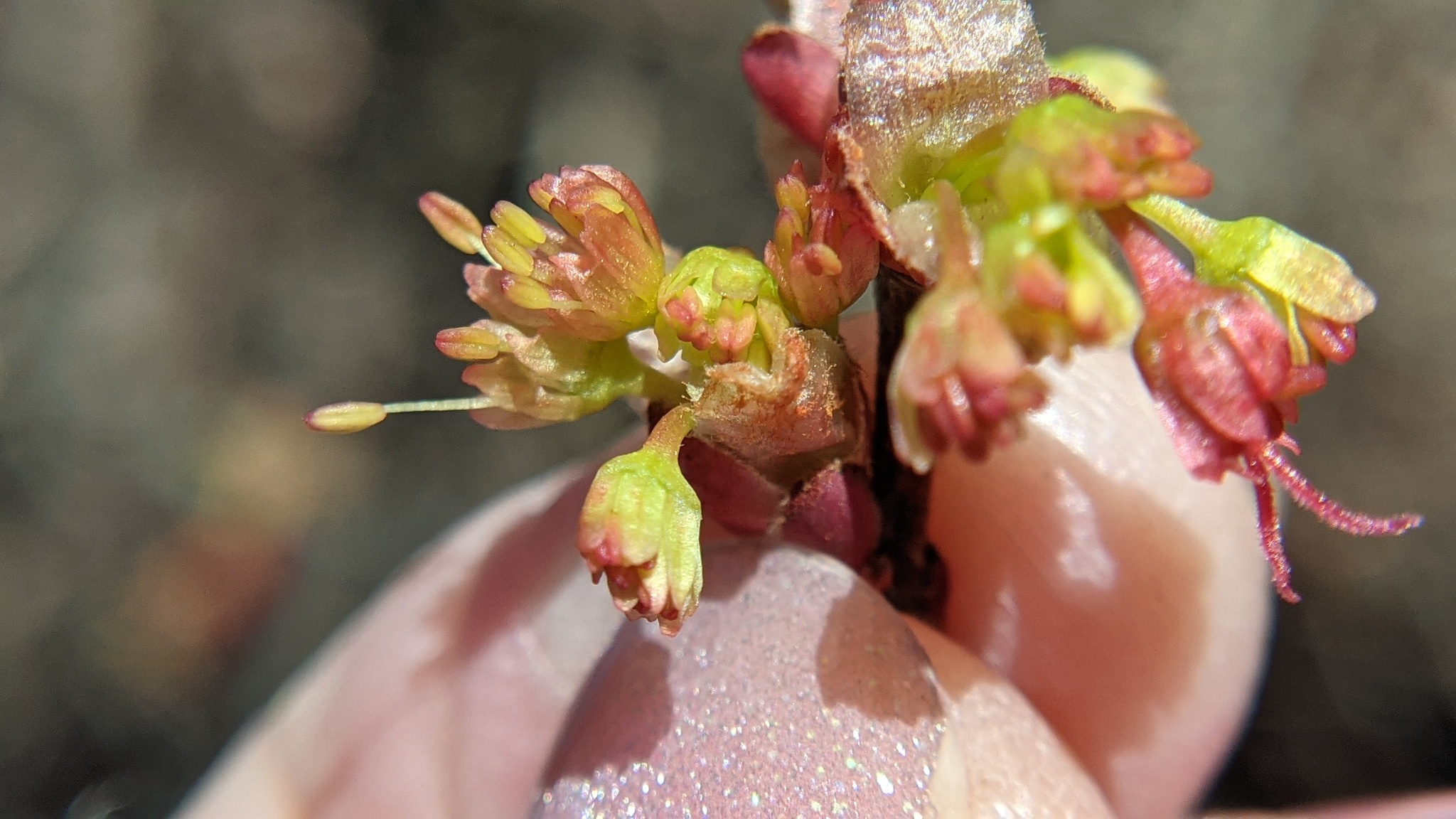
The red maple carries a quiet kind of fluidity in its reproductive life, with populations composed of male, female, and mixed individuals, and even branches that do not remain constant from year to year. 

This one is quite a sight, as it carries both flower in a single head! It highly unusual as on monoecious red maple trees, functioning male and female flowers usually are separated on different branches. Exciting find! A single tree may lean mostly male one season, then shift toward female or mixed expression in another. Botanists describe this variability with terms such as polygamo dioecious. Studies in New England show that individuals of both sexes can produce flowers of the opposite sex, especially under stress. This flexibility is not incidental. It expands the chances for pollination and seed set in early spring, when flowering precedes leaf out and conditions remain uncertain, a form of resilience embedded directly in the biology of the tree. 

Read more: RED ALERT - The Spring Super-Bloom and Sexual Identity in Red Maples

📷 Red Maple · Érable Rouge (Acer rubrum) | © Claire O'Neill, please credit accordingly.