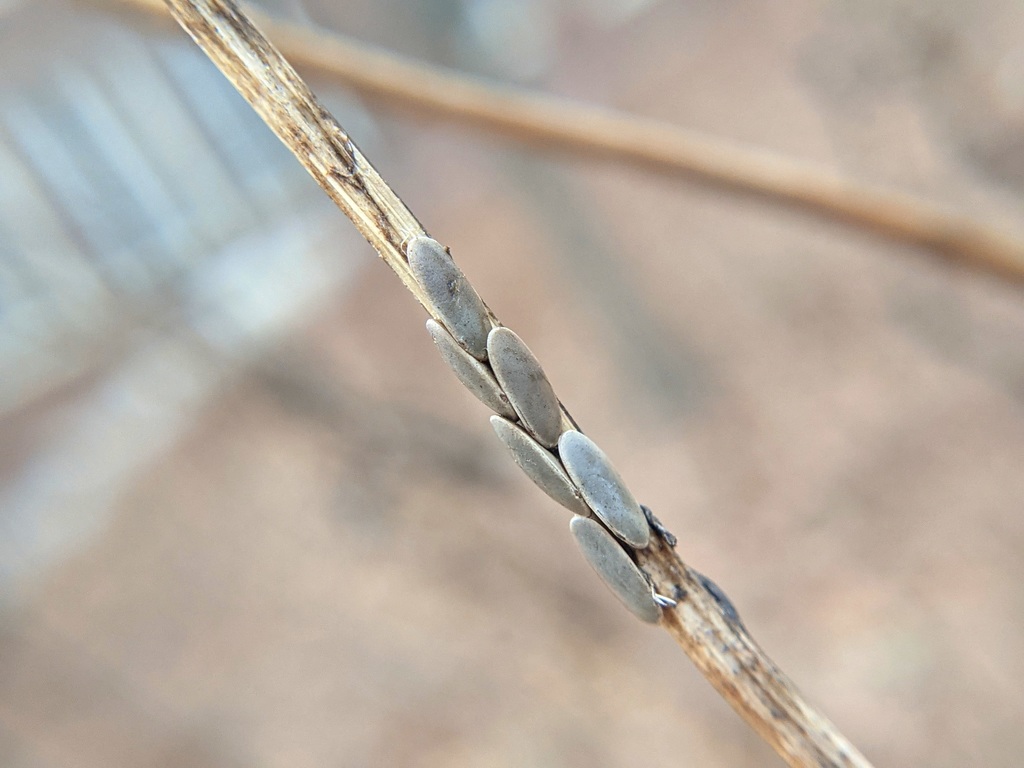
Greater anglewings are quiet now, but their story continues.
In the Northeast, the leafy singers of summer are gone, yet tidy shingled rows of eggs cling to twigs and bark, enduring winter until spring releases a new chorus. I found a row of eggs while walking toward Lusitania Pond at the very beginning of January. The mother chose a tall herbaceous plant to carry her young through the cold months. How many of us passed that strand of seemingly dead flowers without noticing that life was already underway, I wonder.
📷 Greater Anglewing (Microcentrum rhombifolium) | © Claire O'Neill, please credit accordingly.
Sunday, January 18, 2026
Thursday, January 15, 2026
Sunday, January 11, 2026
🍄 Crimped Gill on Decaying Hardwood
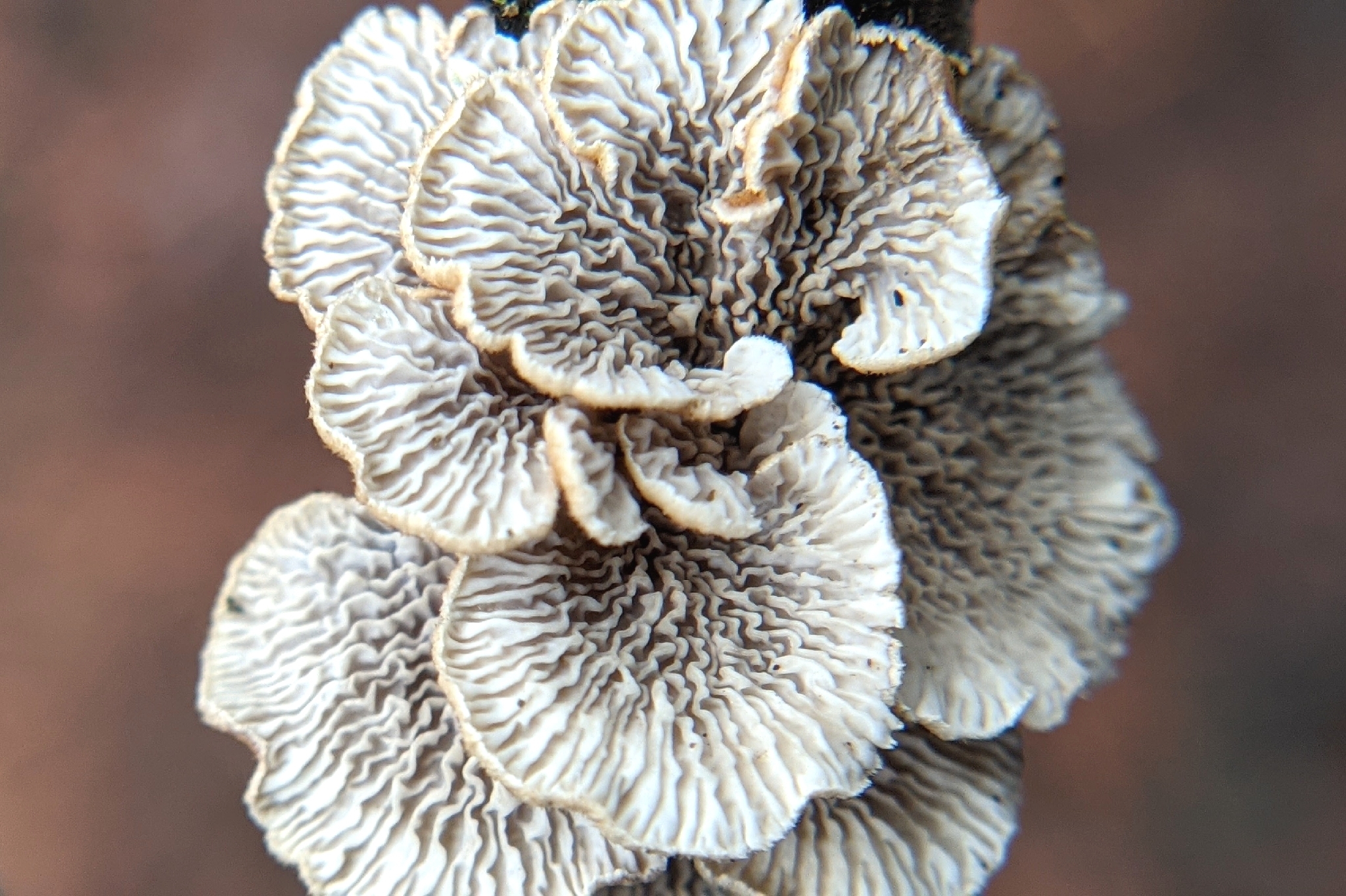
Forest Decomposers Up CloseCrimped gill is the common name for Plicaturopsis crispa, a small wood-rotting fungus found year-round in temperate regions. We came across this specimen yesterday while exploring some parts of the Fells with a lovely group of guests. Crimped gill typically grows in dense, overlapping shelves on dead branches and trunks of deciduous trees, often beech, birch, hazel, and alder. As a saprotrophic fungus, it feeds exclusively on dead wood, playing a quiet but essential role in forest recycling rather than harming living trees.
Its caps are tiny and fan-shaped, with a finely velvety surface marked by pale concentric zones. The wavy, crimped edge gives the species its name. The underside appears strongly gilled, but these are actually wrinkled folds that carry its white spores. Crimped gill causes white rot, breaking down lignin and cellulose and leaving wood pale and fibrous.
📷 Crimped Gill · Plicature Crispée (Plicatura crispa) © Claire O'Neill, please credit accordingly.
Sunday, January 4, 2026
🫐 Berries, Birds, and Winter Wonder
Scarlet Berries, Winter Flocks
Winterberry holly shines when the landscape goes quiet. I love how it pops against the winter backdrop and never fails to lift my spirits. I often find it in bogs, wet thickets, and along pond edges, where its bright red berries mark thriving wetland communities. This one was at a new phenology site in the Outer Cape, just a short walk from a pond. Once the leaves drop, berries cling to every twig, attracting robins, bluebirds, waxwings, and thrushes in lively flocks. Male and female plants work quietly together, making berry-filled shrubs a subtle landscape mystery. Winterberry also connects people and nature. Foraged stems brighten wreaths indoors while uncut shrubs feed birds and reveal healthy wetlands through the coldest months.
📷 Winterberry Holly · Houx Verticillé (Ilex verticillata) © Claire O'Neill, please credit accordingly.
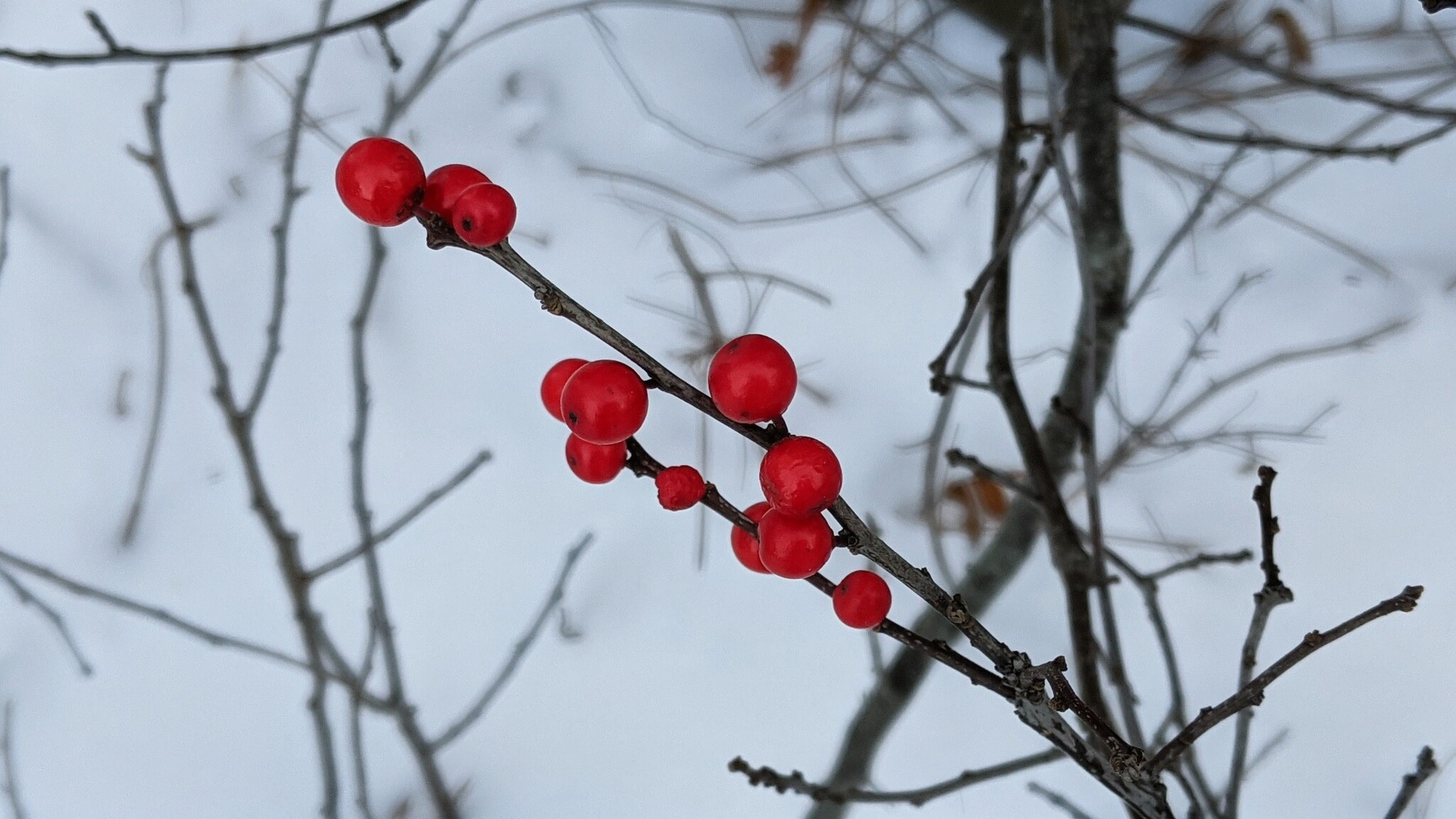
Winterberry holly shines when the landscape goes quiet. I love how it pops against the winter backdrop and never fails to lift my spirits. I often find it in bogs, wet thickets, and along pond edges, where its bright red berries mark thriving wetland communities. This one was at a new phenology site in the Outer Cape, just a short walk from a pond. Once the leaves drop, berries cling to every twig, attracting robins, bluebirds, waxwings, and thrushes in lively flocks. Male and female plants work quietly together, making berry-filled shrubs a subtle landscape mystery. Winterberry also connects people and nature. Foraged stems brighten wreaths indoors while uncut shrubs feed birds and reveal healthy wetlands through the coldest months.
📷 Winterberry Holly · Houx Verticillé (Ilex verticillata) © Claire O'Neill, please credit accordingly.
Subscribe to:
Posts (Atom)


