Saturday, February 28, 2026

๐“‡ฌ Catkins, Beaks, and Early Bloom

Beaked Hazelnut’s Quiet Countdown to Spring

First I love the name of beaked hazelnut (Corylus cornuta) in French: Noisetier ร  long bec. A bec is a beak, and here it clearly refers to the long, pointed husk that encloses the nut; I’m not sure I’ve ever really seen a bird in that shape, but I’ll pay more attention this coming season.

Beaked hazelnut is one of the Northeast’s earliest shrubs to show spring activity, and its story is written in its catkins. Over winter, the pale male catkins hang short and tight, fully formed but dormant on bare twigs (left photo).

What I find remarkable is that these catkins were not produced this winter. They formed during the previous growing season and have spent months exposed to wind, snow, and freezing temperatures, waiting for the right moment. What appears dormant is actually next spring’s pollen already prepared and held in suspension through the cold months.

As late winter warms into early spring, the catkins suddenly elongate and loosen, turning soft yellow and shedding clouds of pollen before any leaves appear. Flowering this early gives the wind a clear path through the shrub, unimpeded by foliage. At the same moment, the tiny female flowers open nearby, showing only bright magenta threadlike stigmas that catch the wind borne pollen (right photo).

I so look forward to seeing those lovely tiny female flowers.

๐Ÿ“ท Beaked Hazelnut (dormant male flower buds, and open female flower) · Noisetier ร  Long Bec (Corylus cornuta) | © Claire O'Neill, please credit accordingly.

Sunday, February 15, 2026

๐ŸŒฒ Life on a Needle

Tracking Tracks on Needles

While Jay and I were examining a pine tube moth on a white pine, Jay noticed two neat rows of tiny brown barrels along another needle, each with a star‑shaped opening. At first I thought they might be sawfly eggs, but quickly decided against it. Some searching suggested lacewings, but their egg structure and hatching openings didn’t match. On closer inspection, I think these are assassin bug egg cases. I have seen similar barrel‑shaped cases with coronate openings left after nymphs hatched. It’s a delight to spot such tiny patterns, chase false leads, and finally identify the maker. 

Next time I’m under the pines, I’ll be scanning for more of these star‑crowned barrels.

๐Ÿ“ท Assassin Bugs · Rรฉduves (Family Reduviidae) | © Claire O'Neill, please credit accordingly.

Thursday, February 12, 2026

❄️ Signs of Living Soil in Late Winter

When the Snow Comes Alive

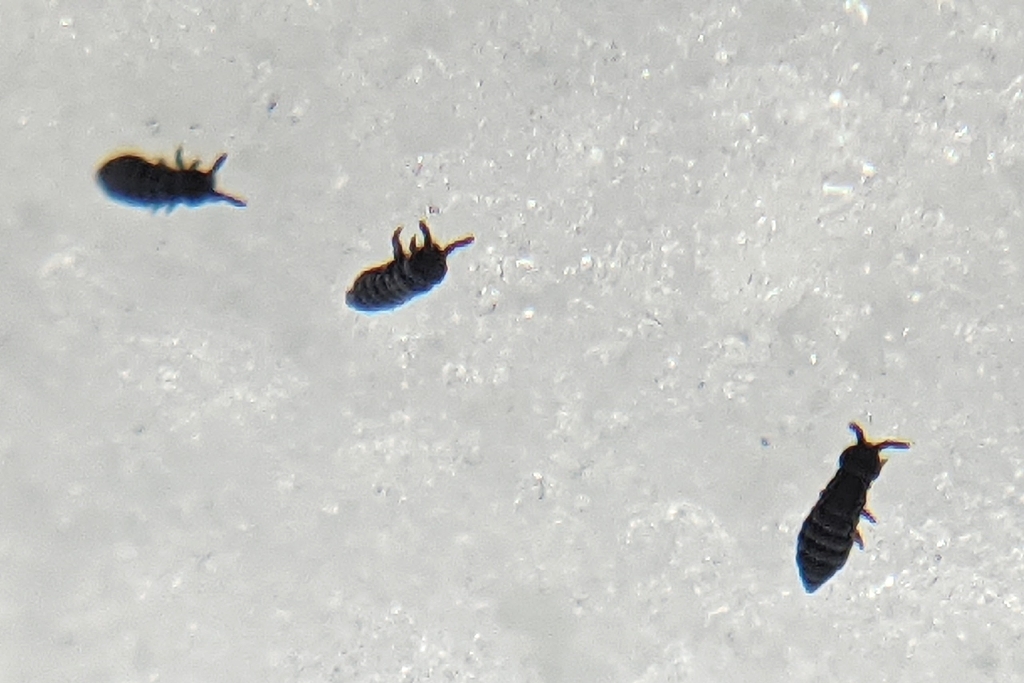
I felt a flicker of excitement when the temperature edged upward and I began scanning the snow for tiny moving specks while scouting a trail for an EwA walk. There they were: Thousands of them, gathering in shallow depressions along the paths I was exploring!

Snow fleas that are not fleas: meet the springtails

Those black dots peppering late winter snow are neither dirt nor fleas. They are springtails, minute soil animals in the group Collembola. They are close relatives of insects, but not true insects and certainly not fleas. Their mouthparts are enclosed within the head, and they move by snapping a forked appendage called a furcula on the underside of the body, rather than by using enlarged hind legs.

On snowpack, species such as Hypogastrura nivicola, which is likely what I observed, emerge from the subnivean zone on milder days near freezing. They feed on wind blown pollen, algae, fungi, and other organic particles. As active decomposers, they continue recycling nutrients through winter, even when the forest appears dormant.

Despite the nickname, they do not bite, drink blood, or infest pets or people. A winter landscape dotted with “snow fleas” is a sign of living, organic rich soil quietly doing its work. Here's a video I took. Adorable, no?

๐Ÿ“ท Hypogastrurid Springtails (Family Hypogastruridae) | © Claire O'Neill, please credit accordingly.
Sunday, February 8, 2026

๐Ÿ„ The Story Written on Beech Bark

The Long Partnership Behind Beech Bark Disease

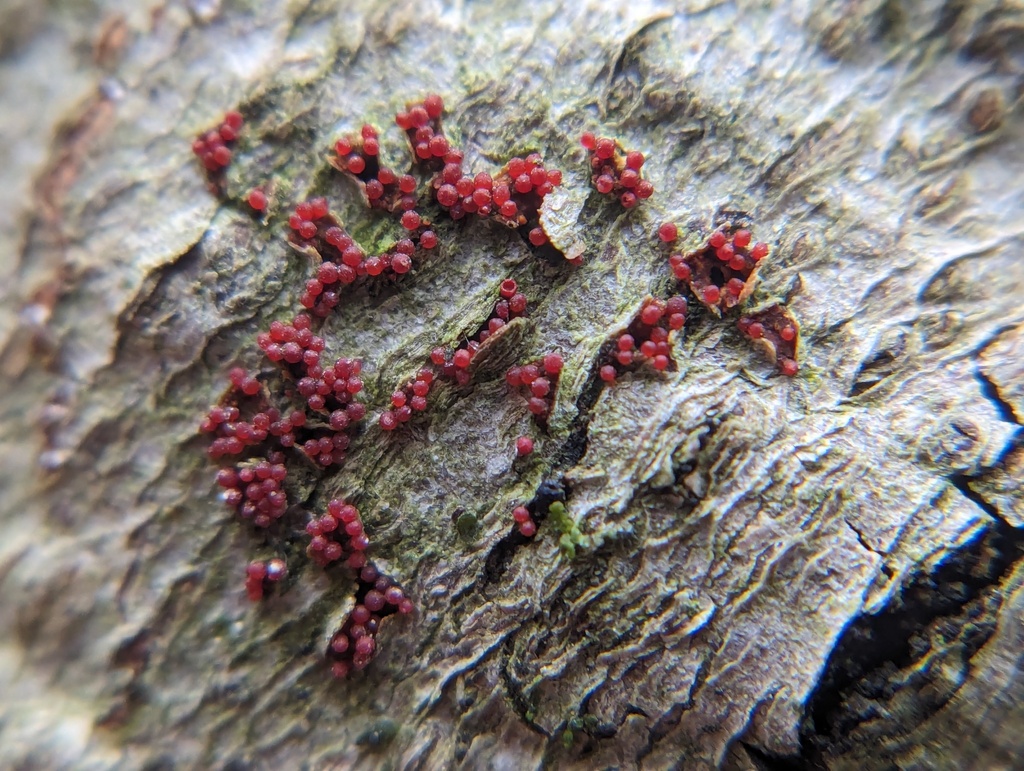
During the colder months, I often notice the fruiting bodies of the beech bark canker fungus on American beech. Across the Northeast, beech trunks commonly bear a rough gray armor of cankers, the visible result of a long standing interaction between an invasive insect and a pathogenic fungus. Together, beech scale insects and the fungus Neonectria faginata cause what is known as beech bark disease.

The process begins when beech scale insects feed by piercing the bark, creating thousands of small wounds. Neonectria spores exploit these openings, invading the living tissues beneath and killing localized areas of phloem and cambium. Early symptoms appear as scattered white flecks of scale on bark that was once smooth. As the disease advances, the bark becomes pitted and irregular, and during winter the fungus produces clusters of minute red fruiting bodies on cankered areas.

This disease complex arrived in Atlantic Canada in the late nineteenth century and was established in New England forests by the early twentieth century. It has since spread through much of the northeastern range of American beech, killing many large canopy trees. The loss of mature beeches alters forest structure, reshaping light availability, understory plant communities, and wildlife habitat.

Not all beeches succumb. Some individuals show partial resistance, limiting infections and keeping cankers small and contained. These survivors may play an important role in shaping the future persistence of American beech and its fungal antagonist in northeastern forests.

References 

Cale, J. A., Garrison-Johnston, M. T., Teale, S. A., & Castello, J. D. (2017). Beech bark disease in North America: Over a century of research revisited. Forest Ecology and Management, 394, 86–103. https://doi.org/10.1016/j.foreco.2017.03.031

Beech Bark Disease: Landscape: Center for Agriculture, Food, and the Environment (CAFE) at UMass Amherst. (2023, December 4). https://www.umass.edu/agriculture-food-environment/landscape/fact-sheets/beech-bark-disease

๐Ÿ“ท Beech Bark Canker Fungus (Neonectria faginata) | © Claire O'Neill, please credit accordingly.
Sunday, February 1, 2026

๐“†ฃ Winter Life of a Wood Dwelling Beetle

Waiting Out the Cold

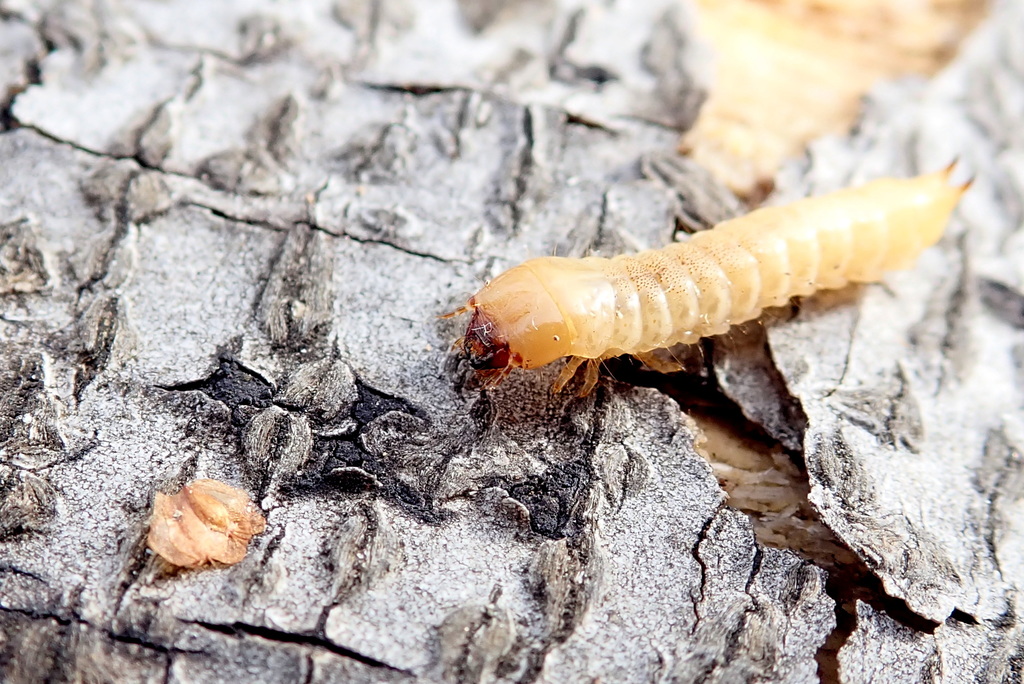
This is a punctate synchronized bark beetle. I do not recall the exact conditions under which I found it. The observation itself, however, serves as a reminder that beetles do not disappear in winter, nor do many other insects. In the Northeast, the larvae of this species almost certainly remain within wood throughout the colder months.

Natural history information for this species is sparse, and its winter life remains largely undocumented. It likely follows the pattern of many temperate wood associated beetles, with larvae persisting in the wood in a state of reduced activity before resuming feeding and development as temperatures rise in spring. Much of what we know is inferred from related species and broader studies of insect overwintering, making the particulars less certain than the broader story.

Like many wood associated beetles of the Northeast, this species likely passes the winter concealed within the material that sustains it. Beneath bark and within wood, larvae can remain insulated from the cold while development slows or pauses altogether. Spring is often thought of as the season when insects appear, but for many beetles it is simply the season when a life already underway becomes visible again.

๐Ÿ“ท Punctate Synchronized Bark Beetle (Synchroa punctata) | © Claire O'Neill, please credit accordingly.