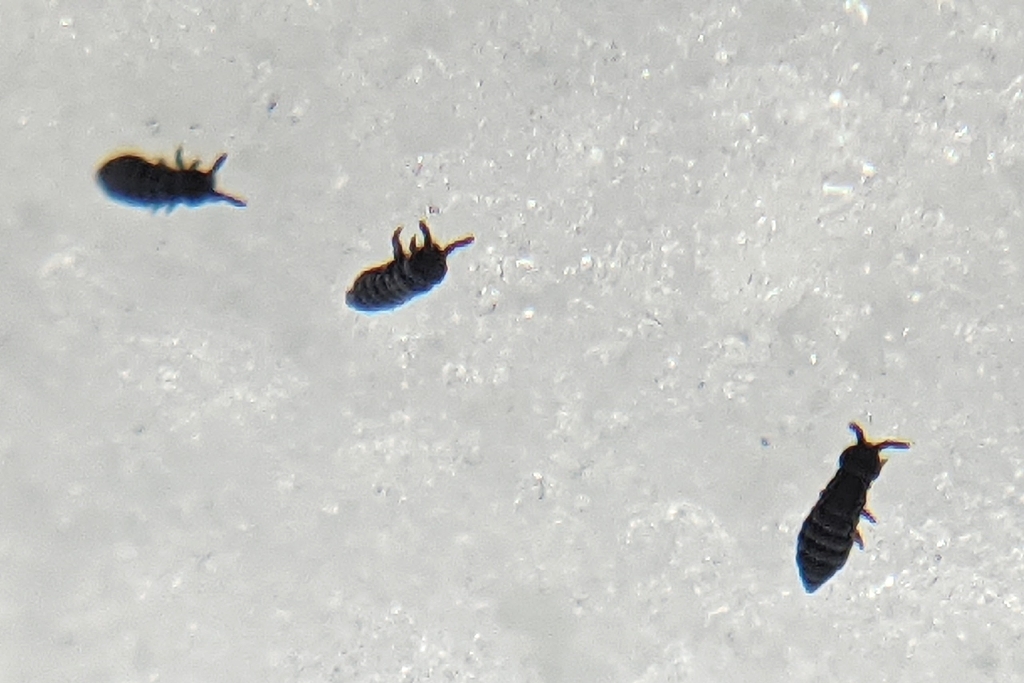
I felt a flicker of excitement when the temperature edged upward, and I began scanning the snow for tiny moving specks while scouting a trail for an EwA walk. There they were: Thousands of them, gathering in shallow depressions along the paths I was exploring!
Snow fleas that are not fleas: meet the springtails
Those black dots peppering late winter snow are neither dirt nor fleas. They are springtails, minute soil animals in the group Collembola. They are close relatives of insects, but not true insects and certainly not fleas. Their mouthparts are enclosed within the head, and they move by snapping a forked appendage called a furcula on the underside of the body, rather than by using enlarged hind legs.
On snowpack, species such as Hypogastrura nivicola, which is likely what I observed, emerge from the subnivean zone on milder days near freezing. They feed on wind-blown pollen, algae, fungi, and other organic particles. As active decomposers, they continue recycling nutrients through winter, even when the forest appears dormant.
Despite the nickname, they do not bite, drink blood, or infest pets or people. A winter landscape dotted with “snow fleas” is a sign of living, organic-rich soil quietly doing its work. Here's a video I took. Adorable, no?
📷 Hypogastrurid Springtails (Family Hypogastruridae) | © Claire O'Neill, please credit accordingly.

No comments:
Post a Comment