Leaf emergence follows quickly as temperatures rise. Shoots then grow rapidly through the moist stretch of the growing season, especially along riverbanks, floodplains, and wetland edges where willows thrive. By late summer, growth slows and the season’s shoots begin forming buds. These buds harden as autumn approaches, preparing the trees for winter and closing a phenological cycle that closely tracks floodplain hydrology and the needs of early spring pollinators.
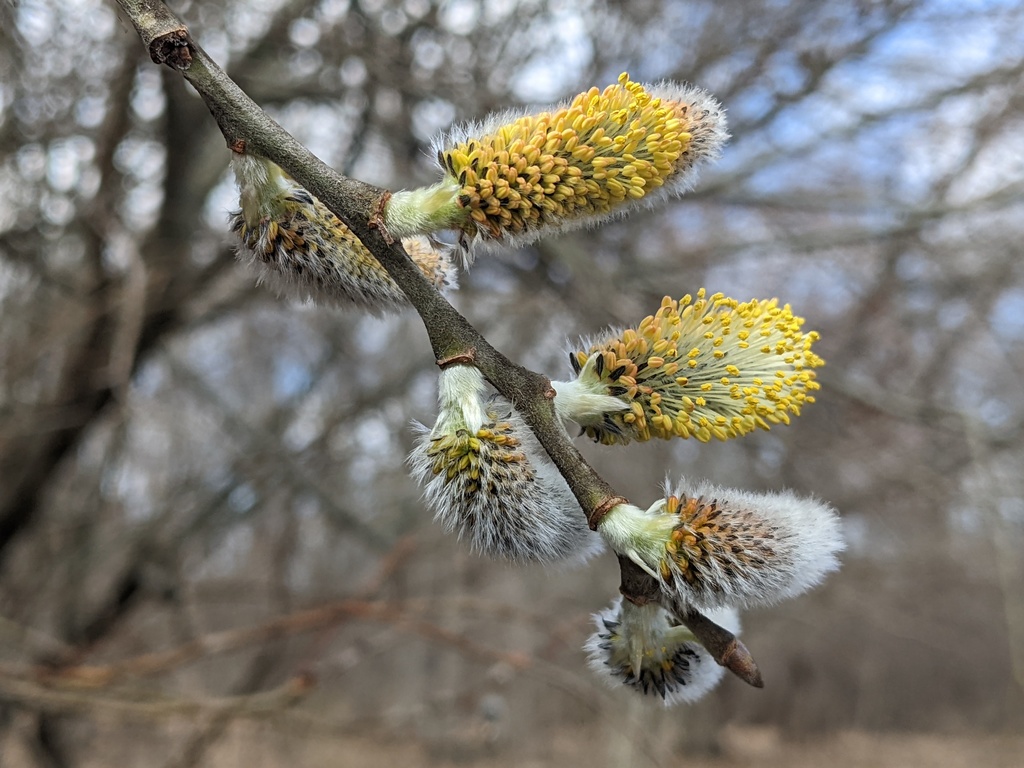
📷 Pussy Willow · Saule Discolore (Salix discolor) | © Claire O'Neill, please credit accordingly.

No comments:
Post a Comment