There is a particular satisfaction in watching a biological process unfold exactly as described in a textbook, right in front of your lens.
Today, I came across a patch of geraniums along the trail. I sat on the forest floor and took the time to explore the heart of their flowers.
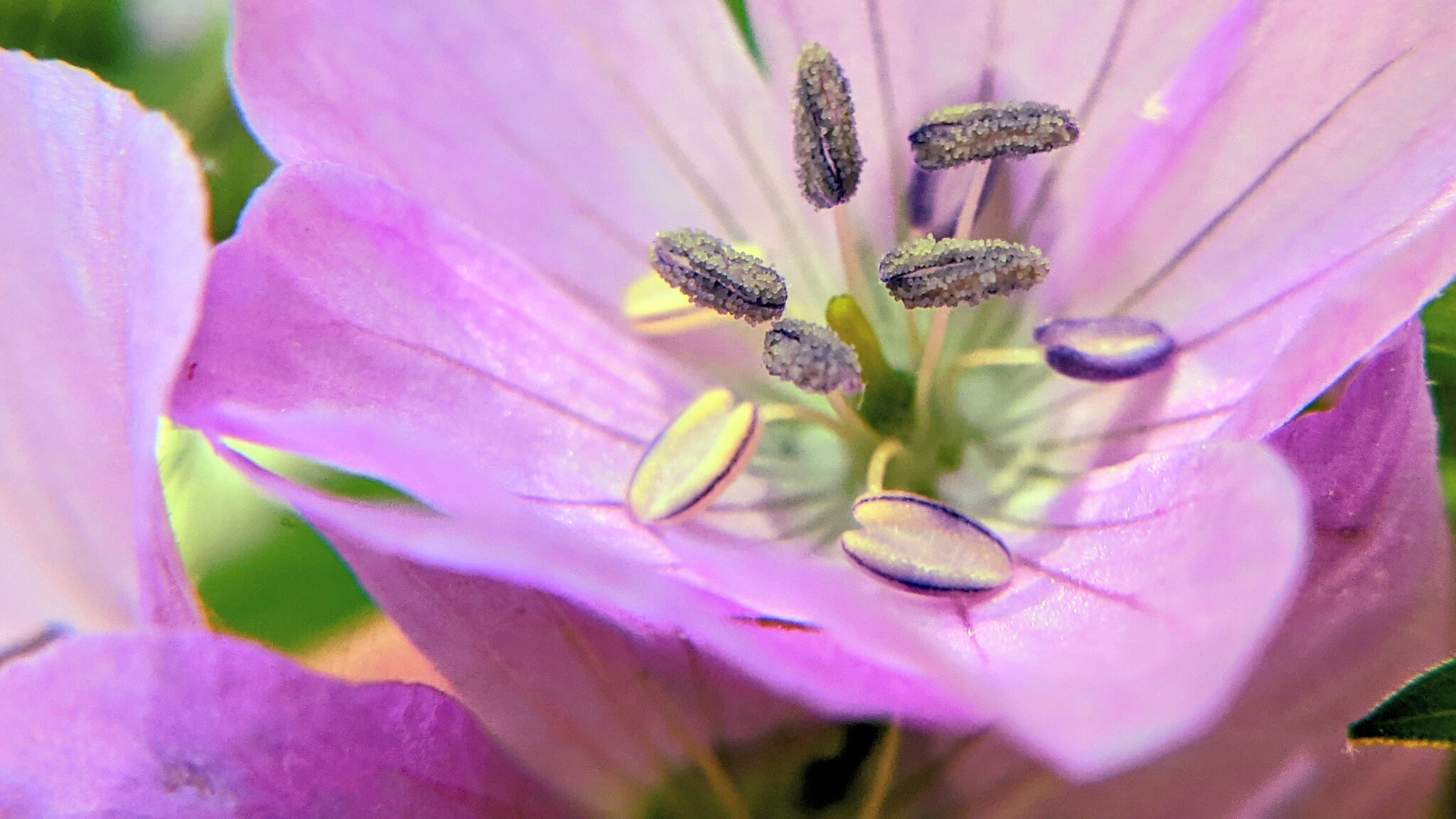
Look at these anthers. They are the pollen producing male reproductive structures of the flower, typically perched atop a slender stalk called a filament. The images tell the story: the smooth, plump vitality of the younger anthers contrasted with the dark, textured dehiscence of the mature ones. Individual pollen grains stand out with startling clarity. Being able to witness this level of detail feels like a privilege.
To top off an already wonderful day in the field, I was also able to map the timing and transformation of the female reproductive structures. Seeing the entire cycle unfold in real life, in real time, never ceases to amaze me.
We Forget What Plants Do.
For me, moments like this are also a reminder of the extraordinary sophistication of plants. We still too often think of them as somehow inferior to animals, when in reality they rival, and in many respects surpass, animals in the diversity and elegance of the solutions they have evolved.
We also forget that plants make us what we are. Not just in some distant evolutionary past, but every day. They shape the air we breathe, the food we eat, the climate we inhabit, and the ecosystems on which we depend. They are constantly sustaining the conditions that make our lives possible.
And yet we so often overlook them. We walk past them without noticing, reduce them to scenery, and destroy them without fully understanding what is being lost. Looking into the heart of a flower like this is a reminder that plants are not simply the backdrop of life on Earth.
They are among its greatest architects, and they continue to shape our world every day.
📷 Wild Geranium · Géranium Maculé (Geranium maculatum) | © Claire O'Neill, please credit accordingly | EwA Pheno Lite observation → here

No comments:
Post a Comment